Skradinski Buk
The Crown Jewel of Krka National Park
Skradinski Buk is the most spectacular waterfall complex in Krka National Park, featuring 17 travertine cascades spanning 800 meters with a total height of 45.7 meters, making it one of the largest cascade systems in Europe.
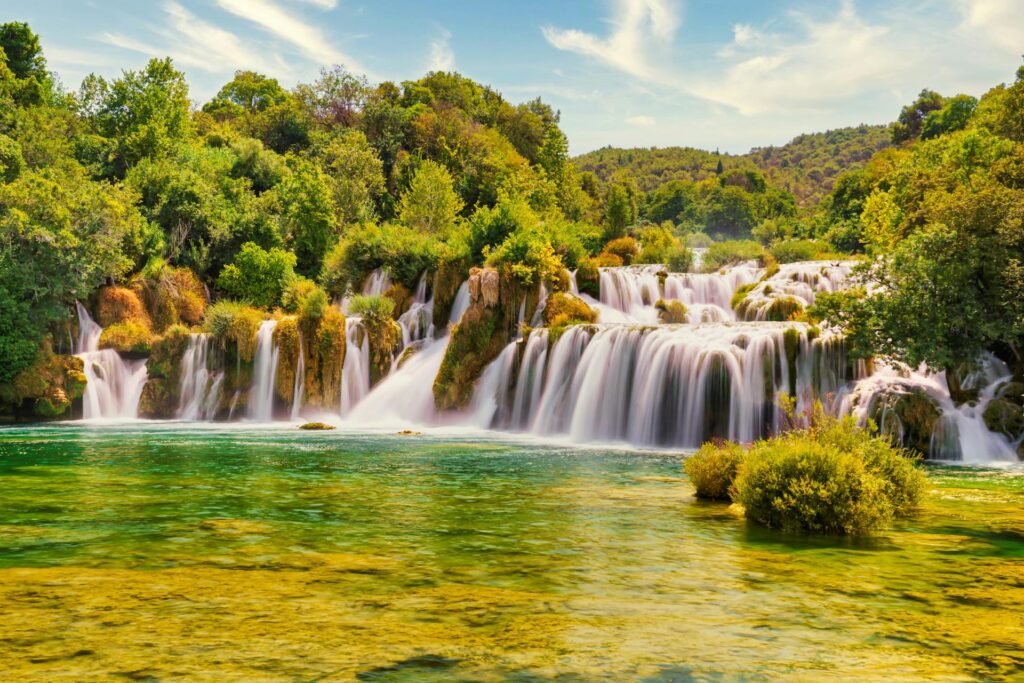
This magnificent natural amphitheater showcases the power of water sculpting limestone over millennia, creating dramatic terraced pools and rushing waterfalls that captivate over a million visitors annually.
The site seamlessly blends natural wonder with cultural heritage, featuring restored 19th-century water mills and traditional Croatian village elements within the waterfall complex. While swimming was once permitted at the base of the falls, it has been prohibited since 2021 to preserve the delicate ecosystem, though alternative swimming areas remain available elsewhere in the park.
The easily accessible wooden trail system offers spectacular viewing opportunities from multiple angles, while the surrounding area provides excellent photography conditions especially during early morning visits. Spring and autumn offer the best visiting conditions with powerful water flow and moderate crowds, though each season brings its own unique character to this remarkable natural sanctuary.
Perfect for: Photography enthusiasts, nature lovers, families, cultural history buffs
Difficulty: Easy to moderate walking trail
Best time: April-May and September-October
Duration: 3-4 hours
Roški Slap (Roški Waterfall)
The Vast Waterfall with Living History
Roški Slap, known as the “vast waterfall,” is the sixth waterfall complex along the Krka River and the second most popular attraction in Krka National Park. This magnificent 650-meter long cascade system features a spectacular 22.5-meter main waterfall preceded by the famous “Necklaces” – a series of pearl-like travertine cascades that locals describe as resembling lace across the chest of a bride.
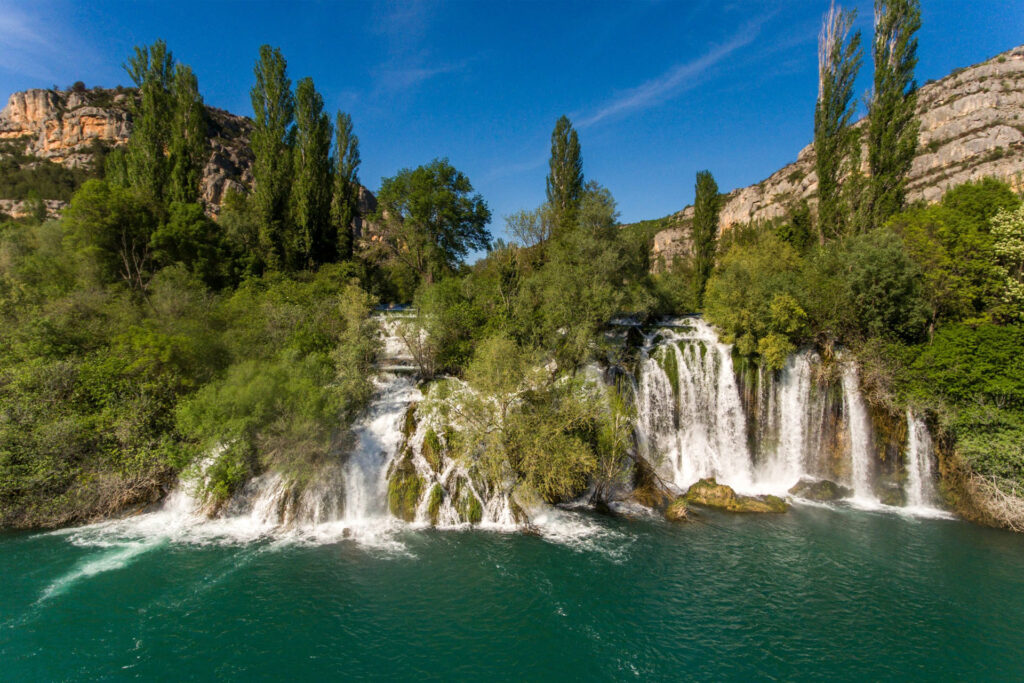
What sets Roški Slap apart is its unique combination of natural beauty and cultural heritage. The site features beautifully restored traditional water mills that demonstrate centuries-old milling techniques, alongside ethnographic exhibitions showcasing rural Croatian life. An ancient Roman road with 22 stone arches crosses above the waterfall, adding historical depth to this natural wonder.
The area offers excellent wildlife viewing opportunities, particularly for birdwatching around Lake Visovac, and maintains designated swimming areas unlike the main Skradinski Buk waterfall. The famous Kristijan restaurant provides an unforgettable dining experience where guests can eat with their feet in flowing waterfall streams.
Accessible by scenic boat journey from Skradinski Buk or direct road access, Roški Slap provides a more intimate and less crowded alternative to the park’s main attraction while offering equal natural beauty enhanced by rich cultural experiences.
Perfect for: Cultural history enthusiasts, birdwatchers, families, photographers seeking unique dining experiences
Difficulty: Easy flat trails with optional challenging cave climb
Best time: April-October (boat access), year-round (road access)
Duration: 2-3 hours
Manojlovac Waterfall
The Hidden Giant and Tallest Cascade in Krka
Manojlovac Waterfall stands as the crown jewel of Krka National Park’s cascade system, soaring to an impressive 59.6 meters (195 feet) to claim the title of the park’s tallest and most spectacular waterfall. Located in the remote northern section of the park, this hidden giant offers an adventurous alternative to the more crowded southern attractions, rewarding intrepid visitors with pristine natural beauty and dramatic canyon vistas.
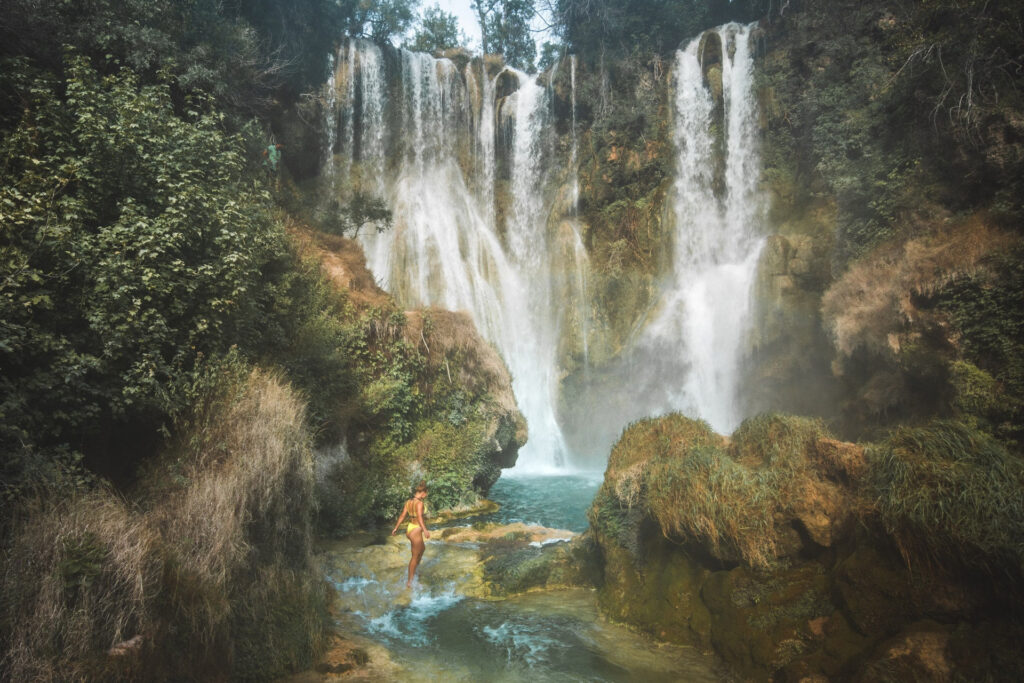
The waterfall consists of multiple travertine barriers spanning 500 meters in length, with the final 32.2-meter cascade occurring at a dramatic 180-degree river bend. This geological masterpiece is surrounded by lush Mediterranean vegetation and offers exceptional photography opportunities, particularly during spring when water flow is at its peak.
Historical significance adds depth to the natural wonder – Austrian Emperor Franz Joseph I and Empress Elizabeth of Bavaria visited in 1875, an event commemorated by a restored monument plaque along the trail. Access requires a scenic but challenging drive through winding mountain roads to the remote Burnum entrance, followed by hiking that ranges from easy viewpoint access to adventurous scrambling for base-level exploration.
Perfect for photographers seeking dramatic long-exposure opportunities and nature enthusiasts willing to venture off the beaten path for an authentic wilderness experience.
Perfect for: Adventure seekers, serious photographers, history enthusiasts, those avoiding crowds
Difficulty: Easy to viewpoint, challenging to base (current access restrictions may apply)
Best time: April-June for maximum flow, early morning/late afternoon for optimal lighting
Duration: 2-4 hours including travel time
Bilušića Buk
The First and Most Pristine Waterfall of Krka
Bilušića Buk holds the honor of being the first waterfall encountered along the Krka River’s journey to the sea, standing 22.4 meters high and stretching 300 meters in length. What makes this cascade truly special is its pristine character—it remains the only waterfall in Krka National Park that has never been harnessed for hydroelectric power, allowing the entire natural flow of the Krka River to cascade unimpeded over its two distinctive travertine steps year-round.
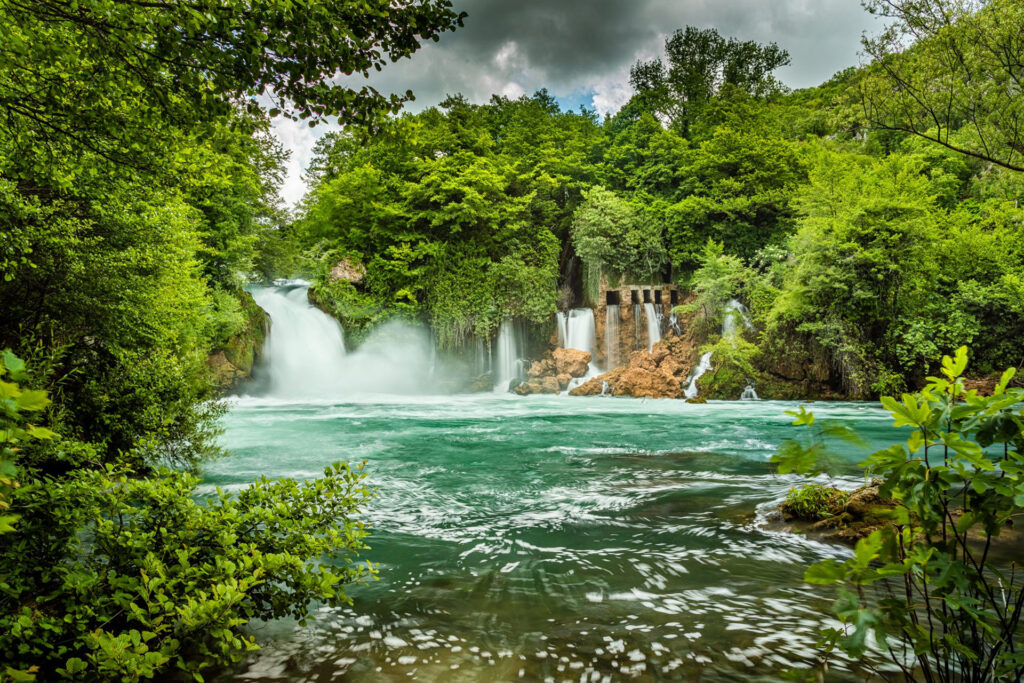
Located in a secluded canyon 16 kilometers from the river’s source, this “noisy and picturesque waterfall” offers visitors an authentic wilderness experience enhanced by ivy-covered ancient watermills that create an enchanting fairy-tale atmosphere. The site features remarkable geological diversity, showcasing both active “living” travertine formations and exceptionally preserved 125,000-year-old fossil formations from ancient interglacial periods.
Accessible via the Burnum entrance through a scenic hiking trail, Bilušića Buk provides year-round access and exceptional photography opportunities in a peaceful setting. The canyon environment creates a natural cooling effect of up to 20°C, making it particularly appealing during hot summer months while offering intimate encounters with undisturbed Croatian wilderness.
Perfect for visitors seeking authentic natural experiences away from crowds, geological enthusiasts, and photographers drawn to pristine waterfall environments.
Perfect for: Nature purists, geological enthusiasts, photographers seeking pristine subjects, peaceful contemplation
Difficulty: Moderate hiking with canyon descent
Best time: Spring for maximum flow, year-round accessibility
Duration: 2-3 hours including hiking and exploration
Brljan Waterfall
The Second Step with Spectacular Seasonal Drama
Brljan Waterfall stands as the second waterfall along the Krka River’s journey to the sea, offering one of the most dramatic seasonal transformations in the entire park system. This impressive 15.5-meter cascade spans 300 meters in length and 180 meters in width, tumbling over distinctive travertine ridges into the expansive Brljan Lake (Ćorić Lake) – a stunning 1,300-meter long body of water that perfectly mirrors the surrounding canyon walls.
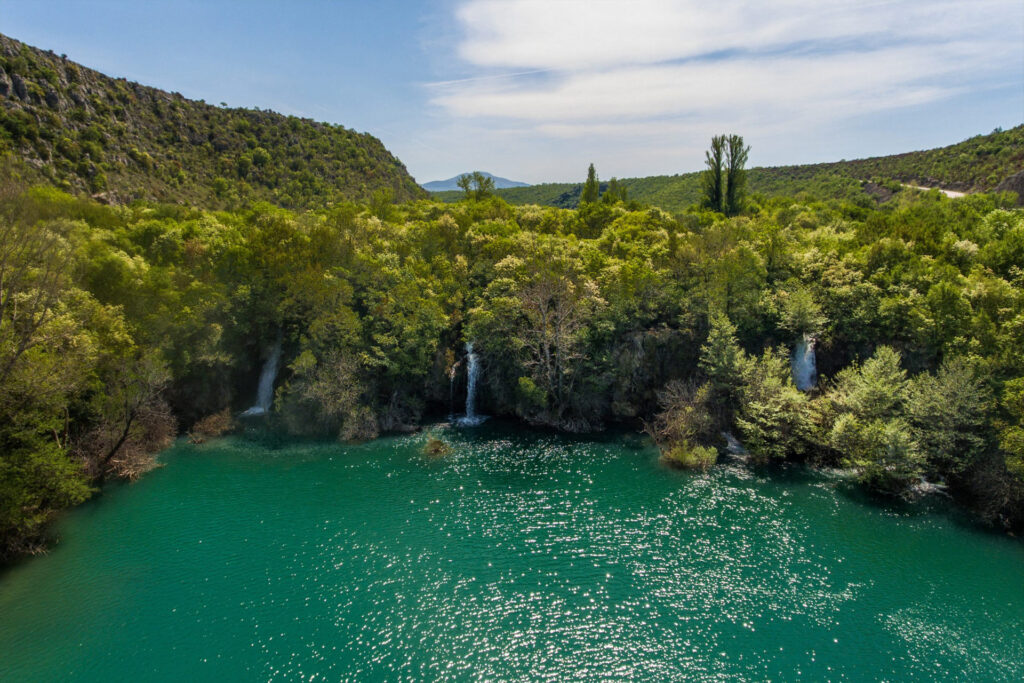
Located 19 kilometers from the river’s source, Brljan creates a striking visual contrast between the silver cascading waters and the brilliant blue lake below. The site combines natural wonder with historical significance, situated near the ancient Roman legionary camp of Burnum, offering visitors both geological marvels and archaeological treasures in a single location.
What makes Brljan unique is its dramatic seasonal variation – during spring high waters, the lake overflows magnificently over travertine barriers creating one of the park’s most photographed scenes, while summer months may see the waterfall completely dry due to hydroelectric diversions. This dynamic character provides visitors with entirely different experiences depending on timing, from powerful spring cascades to exposed travertine geological masterpieces.
Perfect for visitors interested in both natural and historical attractions, photographers seeking dramatic seasonal contrasts, and those exploring the northern section of Krka National Park.
Perfect for: History enthusiasts, photographers, geology lovers, seasonal nature observers
Difficulty: Moderate accessibility with scenic viewpoints
Best time: Spring (April-June) for maximum water flow and visual impact
Duration: 2-3 hours including Roman ruins exploration
Hidden Water Features of Krka National Park
Beyond the Seven Famous Waterfalls
While Krka National Park is renowned for its seven spectacular waterfalls, the park contains a remarkable network of additional water features that create one of Europe’s most complex and beautiful freshwater ecosystems. These hidden aquatic treasures showcase the full diversity of karst hydrology and provide intimate water experiences away from the crowded main attractions.
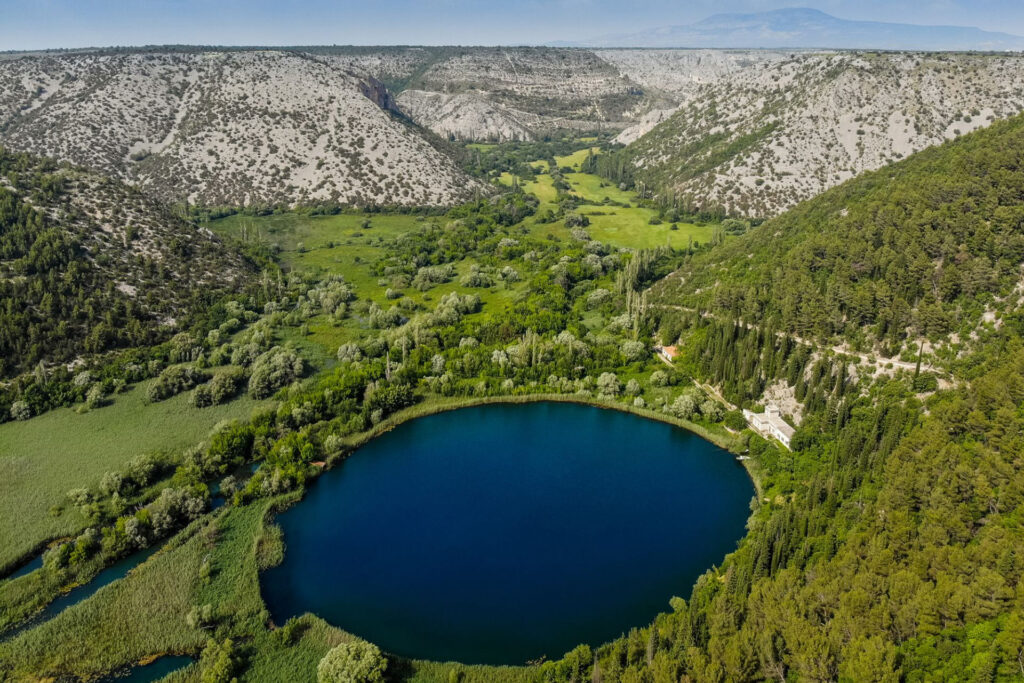
The extraordinary confluence of the Čikola and Krka rivers near Skradinski Buk creates one of Croatia’s most unusual river meetings, featuring the mysterious Torak Spring – a 150-meter diameter, 30-meter deep lake-like spring that defies conventional understanding. This confluence, divided by Kalički Basin island, fundamentally transforms both rivers and provides the substantial water volume that makes Skradinski Buk so powerful.
The park’s spring systems reveal fascinating karst hydrology, beginning with the triple-spring source of the Krka River itself near Knin. Here, the remarkable Topoljski Buk waterfall simultaneously serves as both the mouth of the Krčić River and the source of the Krka, creating a unique hydrological phenomenon where an ending becomes a beginning. The Main Spring, Small Spring, and Third Spring together demonstrate the complex underground water networks that characterize Croatian karst landscapes.
Throughout the park, countless smaller cascades, travertine pools, canyon pools, and seasonal water features create an intricate aquatic mosaic supporting endemic fish species and providing critical habitat connectivity. These features range from intimate mill ponds with centuries of history to dramatic underground emergence points where hidden streams briefly surface before rejoining the main river system.
Perfect for visitors seeking peaceful water experiences, photographers interested in intimate aquatic subjects, and nature enthusiasts wanting to understand the complete karst ecosystem beyond the main tourist attractions.
Perfect for: Nature photographers, ecology enthusiasts, peaceful exploration, karst geology education
Difficulty: Variable – from easy trail access to adventurous exploration
Best time: Spring for full seasonal spring activity and optimal water levels
Duration: Can be explored throughout multi-day park visits