Formation and Characteristics
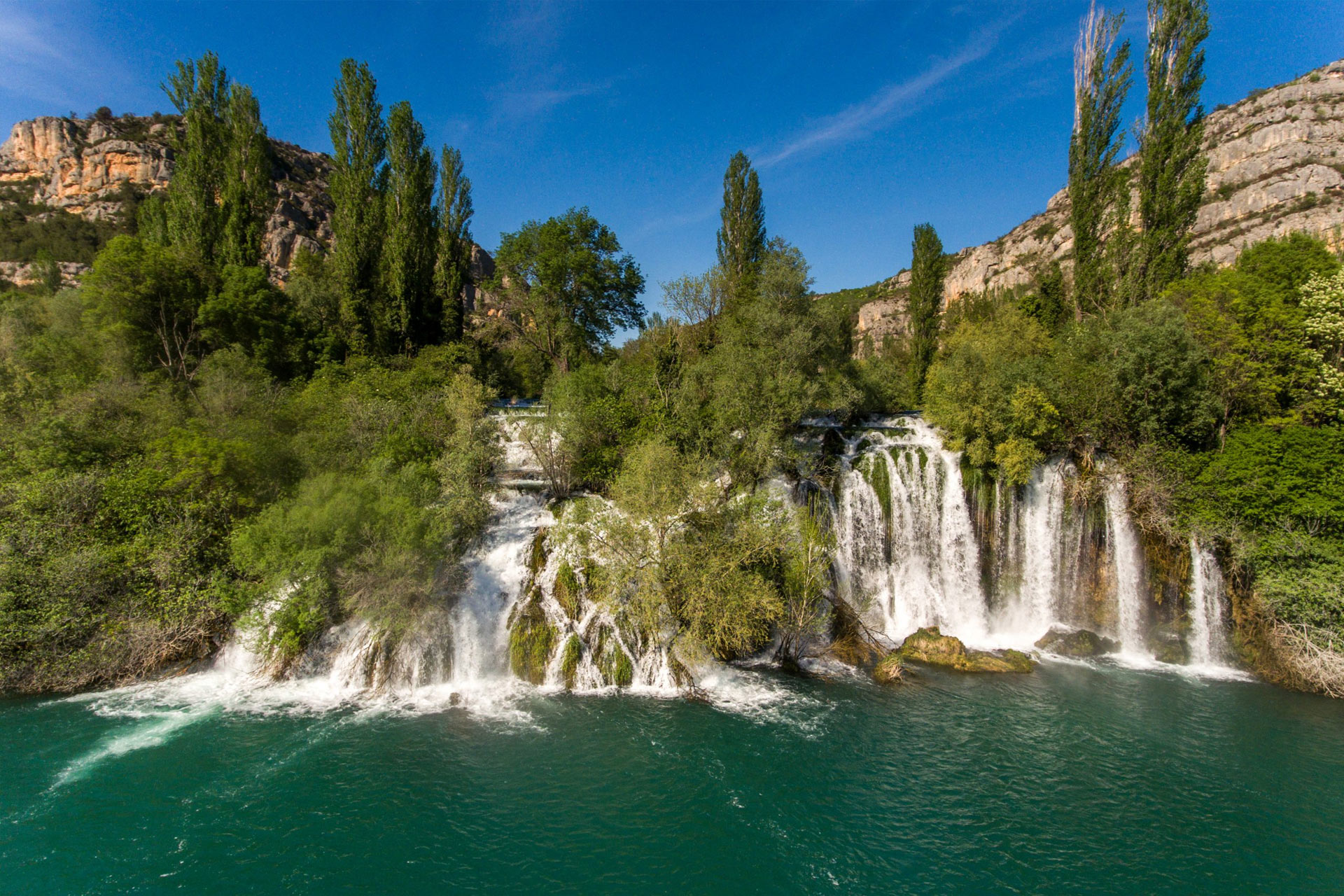
Roški Slap, also known as the “vast waterfall,” stands as the sixth and second most popular waterfall complex in Krka National Park. Located approximately 36 kilometers downstream from the Krka River spring, this spectacular natural formation consists of a 22.5-meter high main waterfall accompanied by countless backwaters, cascades, and tufa islands spread across a 650-meter length and reaching up to 450 meters in width.
The waterfall complex begins with a series of small travertine cascades that locals affectionately call the “Necklaces” (Ogrlice), scattered across the Krka River like lace across the chest of a bride from Bogatić. These distinctive formations create a fan-shaped cascade system where water flows over multiple channels before culminating in the main waterfall that plunges into Visovac Lake.
The geological foundation of Roški Slap consists of travertine barriers formed over millennia through the continuous deposition of calcium carbonate from the mineral-rich waters of the Krka River. The canyon widens into a distinctive funnel shape at this location, creating ideal conditions for the complex waterfall system to develop. The site’s name derives from the medieval fortress of Rogovo (Rog meaning “horn”), whose ruins once stood on the right bank above the canyon.
A significant historical feature crosses above the waterfall – an ancient Roman road with 22 stone arches that spans the Krka River, providing a fascinating glimpse into the engineering prowess of ancient civilizations. This Roman bridge adds substantial historical depth to the natural wonder, illustrating the centuries-old importance of this river crossing.
Viewing Platforms
Primary Viewing Areas: The best perspectives of Roški Slap can be accessed through several strategically positioned viewing platforms and trails:
Necklaces Observation Points: A circular educational trail spanning 1,360 meters leads visitors over bridges crossing the famous Necklaces cascades, offering intimate views of these pearl-like formations in the middle of the canyon. This completely flat trail includes both gravel sections and wooden bridges, making it accessible to most visitors.
Main Waterfall Viewpoint: The primary viewing area provides spectacular perspectives of the 22.5-meter main cascade as it plunges into the lake below. A pontoon pier offers the best possible view of the Roški waterfall, positioned to capture both the height and width of the impressive falls.
Upper Canyon Vistas: For more adventurous visitors, 517 wooden steps lead from Roški Slap waterfall to Oziđana Cave, providing elevated viewpoints and access to archaeological sites with evidence of human settlement dating back to the Late Stone Age.
Roman Bridge Crossing: Walking across the ancient Roman road bridge offers unique aerial perspectives of the Necklaces and downstream views toward the main waterfall, though visitors share this historic route with vehicles.
Boat Access Information
From Skradinski Buk: Excursion boats operated by Krka National Park depart from Skradinski Buk waterfall with tickets costing 140 Croatian Kuna for adults and 95 Kuna for children, with the journey taking approximately 3.5 hours. This scenic boat trip often includes stops at Visovac Island and its monastery, providing a comprehensive water-based tour of the park’s highlights.
Seasonal Operation: Boat services typically operate from April through October, though schedules may vary based on weather conditions and water levels. During peak season, minimum passenger requirements (usually 6 people) must be met for boats to operate, so services may be irregular during quieter periods.
Multiple Dock Options:
- Upper Dock: Access point for excursion boats heading toward the medieval fortresses of Nečven and Trošenj, offering historical exploration opportunities
- Lower Dock: Departure point for boats to Visovac Island and monastery visits
Alternative Access: For visitors preferring direct access, Roški Slap can be reached by road from Drniš or Laškovica directions, via the routes Šibenik-Pakovo Selo or Šibenik-Skradin. During summer months (June-September), parking at the Roški Slap reception is not possible, requiring visitors to use designated parking areas in Laškovica and Bogatići Miljevački.
Traditional Mills
The traditional water mills of Roški Slap represent one of the most significant cultural heritage features within the waterfall complex. Located on both riverbanks, numerous mills dating back centuries have been carefully restored and returned to their original function, serving as monuments to rural architectural and economic history.
Historical Significance: These mills were historically used to grind wheat and represent the ingenious adaptation of local communities to harness the power of the Krka River for essential daily needs. The mills showcase traditional Croatian engineering and the intimate relationship between local populations and their natural environment.
Cultural Demonstrations: Several restored watermills now serve to demonstrate old trades and traditional milling processes, offering visitors hands-on experiences of historical Croatian craftsmanship. Alongside the mills, visitors can explore a renovated pillar for wool production and a valjavica (traditional washing facility) for fabrics, which hold special cultural and historical significance as ethnographic monuments.
Ethnographic Exhibitions: The mill complex features comprehensive ethnographic collections displaying traditional tools, household items, and demonstrations of various rural trades including forging and weaving. These exhibitions provide insight into how local communities lived and worked before the Industrial Revolution, with displays that appear more extensive and better presented than similar collections elsewhere in the park.
Accessibility: The mills are easily accessible via the main walking trail system, with clear signage and interpretive displays available in multiple languages to enhance the educational experience.
Wildlife Viewing Opportunities
Roški Slap offers exceptional wildlife viewing opportunities, particularly for bird enthusiasts and nature photographers seeking to observe Croatia’s diverse fauna in their natural habitat.
Avian Species: The area upstream of Roški Slap where the Krka River broadens into Lake Visovac serves as an important habitat for marsh birds, creating ideal conditions for birdwatching throughout the year. Even during boat tours that might otherwise disturb wildlife, there is abundant birdlife visible along the shores, testament to the healthy ecosystem maintained within the park.
Aquatic Life: The clear waters around Roški Slap teem with fish species, many of which are endemic to the Krka River system. The small waterfalls and calm backwaters provide ideal viewing conditions for observing fish populations, particularly in the quieter areas around the Necklaces cascades.
Waterfowl Observation: Geese and various duck species frequent the lake areas around Roški Slap, particularly near the swimming areas where they feel safe from human disturbance. These areas provide excellent opportunities for wildlife photography and peaceful observation.
Seasonal Variations: Spring and autumn migrations bring additional bird species to the area, while summer months offer the best conditions for observing aquatic life through the crystal-clear waters. Early morning and late afternoon visits typically provide the most rewarding wildlife viewing experiences when animals are most active.
Conservation Context: The rich canyon vegetation around Roški Slap creates distinctively diverse habitats where dry, light areas meet moist, shady environments, supporting an exceptional variety of plant and animal species. This biodiversity makes the area particularly valuable for ecological education and nature appreciation.
Photography Opportunities: The combination of waterfalls, historic mills, and diverse wildlife creates outstanding photography conditions. The varied lighting conditions throughout the day, from the soft morning light filtering through canyon walls to the dramatic afternoon shadows, provide excellent opportunities for capturing both wildlife and landscape images.
Visitor Information
Swimming Opportunities: Unlike at Skradinski Buk, swimming is permitted in designated areas of the lake at Roški Slap, though visitors should be prepared for clear but potentially cool water and should wear appropriate water shoes due to rocky lake bottoms.
Dining Options: The famous Kristijan restaurant offers a unique dining experience where tables are positioned directly under waterfall streams, allowing guests to dine with their feet in the flowing water – a heavenly experience during hot summer days. Traditional cheese and ham boards featuring local produce are served, though the restaurant operates on a cash-only basis.
Trail Difficulty: The main circular trail is completely flat and suitable for most fitness levels, though the optional climb to Oziđana Cave requires good physical condition due to the 517 wooden steps involved.
Best Visiting Times: Early morning visits offer the most peaceful experience with optimal wildlife viewing conditions, while late morning provides the best lighting for photography. Consider spending 2-3 hours to fully appreciate both the natural and cultural features of this remarkable site.
Roški Slap represents the perfect synthesis of natural wonder and cultural heritage, offering visitors an immersive experience that encompasses geological marvels, historical significance, traditional craftsmanship, and thriving ecosystems. Whether approached by scenic boat journey or direct road access, this “vast waterfall” provides an unforgettable glimpse into both the natural power and human ingenuity that have shaped the Krka River valley for centuries.