Location and Characteristics
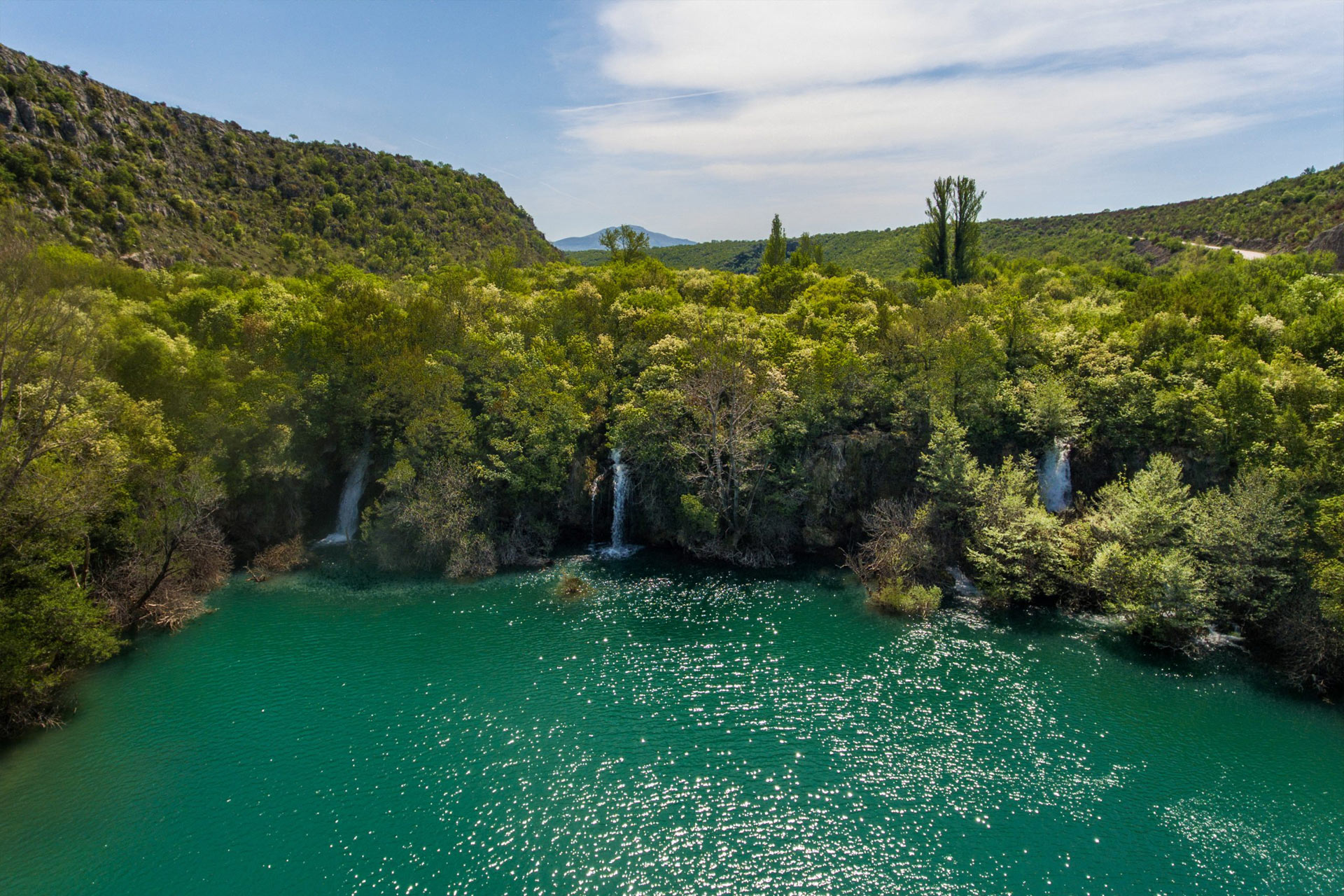
Brljan Waterfall stands as the second waterfall encountered along the Krka River’s journey toward the sea, positioned 19 kilometers downstream from the river’s source near Knin. This impressive cascade marks a significant transition point where the river emerges from the canyon and widens dramatically, creating one of the most visually striking contrasts in Krka National Park.
The waterfall itself measures 15.5 meters in height, stretches 300 meters in length, and spans an impressive 180 meters in width, making it one of the broader cascades in the park system. The water tumbles over distinctive tufa ridges, sills, and natural consoles that have been sculpted over millennia by the mineral-rich waters of the Krka River. These travertine formations create a spectacular terraced effect as the silver waters cascade into the expansive lake below.
Brljan Lake (Ćorić Lake): One of the most remarkable features of this location is Brljan Lake, also known locally as Ćorić Lake or Bjelober. This substantial body of water measures approximately 400 meters wide and extends 1,300 meters in length, creating a mirror-like surface that perfectly reflects the surrounding canyon walls and lush vegetation. The lake’s formation resulted from both natural travertine barrier growth and human intervention through the construction of a concrete dam built to serve the Miljacka hydroelectric plant.
Geological Significance: The travertine barriers at Brljan showcase some of the most impressive natural architecture in the park, with their distinctive ridges and overhangs creating microhabitats for specialized moss species. The dominant moss types found here include Cinclidotus aquaticus and Rhynchostegium riparioides, which contribute to the ongoing travertine formation process that continues to shape this landscape.
Historical Context: The area surrounding Brljan Waterfall is steeped in historical significance, with the remains of the Roman legionary camp of Burnum located nearby. These ancient ruins provide fascinating insight into how this strategic location along the Krka River has been valued for over two millennia. Additionally, traces of more recent human activity can be seen in the form of ancient mills along the riverbank and the so-called “miner’s road,” constructed in 1936 across the waterfall.
Seasonal Water Flow Variations: Unlike some waterfalls in the park, Brljan experiences dramatic seasonal variations due to hydroelectric water diversions. During high water periods, particularly in spring, the lake overflows magnificently over the travertine barriers. However, during warmer months, water is redirected through a drilled tunnel to supply the hydroelectric plant, which can leave the waterfall dry and the 500-meter stretch of riverbed between Brljan and Manojlovac completely desiccated.
Access Information
Primary Access Routes: Brljan Waterfall can be accessed through two main approaches, each offering distinct perspectives and experiences of this remarkable natural feature.
Bukovac Side Access: The most popular and well-established access route approaches from the Bukovac side via the Knin-Kistanje road. Visitors should take the turnoff before reaching Burnum on the road connecting Oklaj and Drniš. This route provides the most spectacular viewpoint, located on the canyon rim several hundred meters from the archaeological site of Burnum. The elevated perspective from this side offers unforgettable vistas encompassing both the waterfall and the expansive Ćorić Lake below.
Promina Side Access: Alternative access is available from the Promina side via the Drniš-Oklaj road, which connects to the main Knin-Kistanje route. This approach offers a different perspective and can be particularly valuable for photographers seeking varied compositions of the waterfall and lake system.
Transportation Requirements: Access to Brljan Waterfall requires private vehicle transportation, as public transportation options are limited in this remote section of Krka National Park. The waterfall is accessible through the Burnum entrance to the park, which is open year-round but may have seasonal limitations during winter months (November through February or March).
Trail System: A well-maintained path exists on the Bukovac side that leads through the canyon and over the waterfall area, providing visitors with close-up views of the travertine formations and access to the Roman ruins of Burnum. The road crossing over the travertine barriers includes designated viewing points on both sides of the river, ensuring visitors can appreciate the full scope of this natural spectacle.
Parking and Facilities: Limited parking is available near the viewing areas, though facilities are basic given the remote location. Visitors should come prepared with water, snacks, and any necessary supplies, as commercial amenities are not readily available in the immediate vicinity.
Connection to Other Attractions: The strategic location of Brljan Waterfall makes it an excellent base for exploring multiple attractions within a single visit. The nearby Burnum Roman archaeological site is easily accessible and provides an excellent complement to the natural beauty of the waterfall. Additionally, the location serves as a convenient stopping point for visitors exploring the northern waterfalls of the park, including Bilušića Buk and Manojlovac.
Best Viewing Times
Optimal Seasonal Timing: The timing of your visit to Brljan Waterfall can dramatically impact your experience, with spring representing the absolute pinnacle period for viewing this natural wonder.
Spring (April-June) – Peak Season: Spring stands as the unequivocal best time to experience Brljan Waterfall in its full glory. During this period, the Krka River reaches its maximum flow due to snowmelt and spring rains, causing Brljan Lake to overflow spectacularly over the travertine barriers. The contrast between the silver cascading water and the brilliant blue lake below creates one of the most photographed scenes in Krka National Park. Spring also brings the emergence of new green foliage, creating a vibrant backdrop where lush vegetation has not yet obscured the intricate travertine cascades. The famous description that the waterfall will “long remain engrained in memory as one of the most impressive natural scenes” applies most accurately to spring visits.
Early Summer (June-July) – Transition Period: Early summer can still provide excellent viewing conditions, particularly in years with extended spring rainfall. However, visitors should be aware that hydroelectric water diversions typically begin during this period, potentially reducing the waterfall’s flow as the season progresses.
Late Summer and Autumn (August-November) – Challenging Period: Late summer and autumn present significant challenges for Brljan Waterfall viewing. During warm months, the waterfall often becomes “dry and lifeless” as water is redirected through the tunnel system to supply the Miljacka hydroelectric plant. The 500-meter riverbed between Brljan and Manojlovac may completely dry out, leaving visitors with a dramatically different landscape than the lush, water-filled scenes of spring.
Winter (December-March) – Variable Conditions: Winter conditions can be unpredictable, with some years providing adequate water flow while others may see continued diversion for hydroelectric purposes. Winter visits offer the advantage of complete solitude and dramatic atmospheric conditions, though weather can be challenging for comfortable viewing and photography.
Daily Timing Considerations: For optimal photography and viewing conditions, early morning visits (first 2-3 hours after sunrise) provide the best lighting, with soft illumination that enhances the contrast between the white travertine formations and the blue lake waters. Late afternoon light (2-3 hours before sunset) offers warm, golden tones that beautifully complement the natural colors of the surrounding sub-Mediterranean vegetation.
Weather Impact: Recent rainfall significantly improves viewing conditions regardless of season, as it temporarily increases natural water flow before hydroelectric diversions resume. Monitoring weather patterns and water levels through park authorities can help visitors time their visit for optimal conditions.
Photography Considerations: The seasonal variations at Brljan create entirely different photographic opportunities. Spring visits capture the waterfall as a powerful natural force with abundant water flow, while autumn visits may document the fascinating geological structure of the travertine barriers when water levels are reduced. Both perspectives offer valuable insights into the dynamic nature of this karst landscape.
Planning Recommendations: Given the significant seasonal variations, visitors specifically interested in seeing Brljan Waterfall should prioritize spring visits and consider building flexibility into their travel plans to accommodate optimal viewing conditions. Those visiting during other seasons should adjust expectations accordingly and appreciate the geological and historical features that remain compelling regardless of water flow levels.
Visitor Information
Duration and Planning: Allow 2-3 hours for a comprehensive visit to Brljan Waterfall, including time for viewing from multiple perspectives, exploring the Roman ruins at Burnum, and photographing the diverse landscapes. The remote location and seasonal variations make advance planning particularly important.
Physical Requirements: The main viewing areas are accessible to visitors with moderate fitness levels, though exploring the canyon paths and approaching the waterfall base requires good mobility and appropriate footwear for potentially uneven terrain.
Educational Opportunities: Brljan Waterfall offers exceptional educational value, combining geological processes, historical significance, and ecological diversity in a single location. The dramatic seasonal changes provide insights into both natural river dynamics and human impact on water systems through hydroelectric development.
Conservation Awareness: The dramatic seasonal variations at Brljan highlight the complex relationship between natural preservation and human energy needs. Visitors gain valuable perspective on how modern development affects natural systems while still appreciating the remarkable beauty that emerges from this intersection of human engineering and natural processes.
Brljan Waterfall represents one of Krka National Park’s most dynamic and seasonally variable attractions, offering visitors the opportunity to witness both the raw power of spring floods and the intricate geological artistry revealed during lower water periods. Whether experienced as a thundering cascade or an exposed masterpiece of travertine architecture, Brljan provides unforgettable insights into the forces that continue to shape Croatia’s most remarkable river landscape.