Features and Accessibility
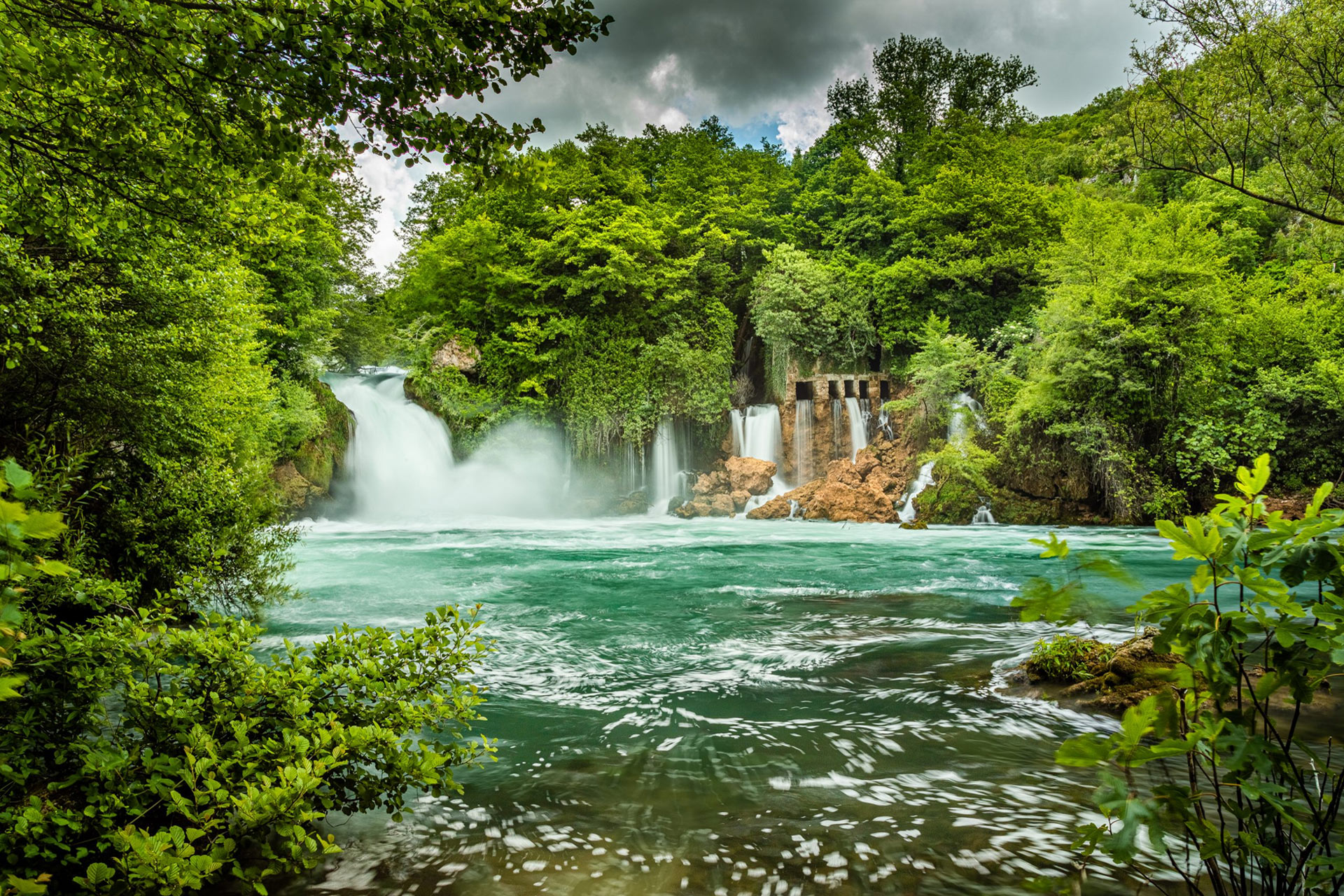
Bilušića Buk holds the distinguished position as the first of the seven magnificent waterfalls along the Krka River, located 16 kilometers downstream from the river’s source near Knin and positioned at an altitude of 214 meters above sea level. This “noisy and picturesque waterfall,” as described by park authorities, stands 22.4 meters high, stretches 300 meters in length, and spans approximately 100 meters in width, making it a substantial and impressive cascade that maintains its full power throughout the year.
What makes Bilušića Buk particularly special is its pristine character – it remains the only waterfall in Krka National Park that has never been utilized for hydroelectric power generation, allowing the entire flow of the Krka River to cascade naturally over its two distinctive travertine steps year-round. This unique status preserves the waterfall’s authentic, untamed character and provides visitors with an experience of nature’s raw power undiluted by human intervention.
The waterfall’s structure consists of two main drops complemented by several intermediate cascades, creating a spectacular tiered effect over its 300-meter length. During periods of low water, the flow concentrates through a narrower channel of just 30 meters wide, intensifying the waterfall’s dramatic impact. The travertine formations showcase nature’s artistry with abundant ridges, overhangs, moss beards, and half-caves that create intricate patterns and textures throughout the cascade system.
Access Routes: The primary access to Bilušića Buk is through the Burnum entrance, located near Ivoševci village, approximately 2.5 kilometers north of Kistanje. The trail to the waterfall can be reached by car from the settlement of Burze on the Knin-Kistanje road. Visitors should be prepared for a descent into the canyon, where the distant roar of water guides them along a well-defined trail leading to this natural wonder.
Trail Experience: The hiking trail offers an enchanting journey through dense vegetation where ivy-covered ancient watermills create an atmosphere reminiscent of a Grimm fairy tale. The trail culminates at a small lagoon where visitors can witness the white waters of Bilušića cascading into the clear pool below. A wooden table and bench are thoughtfully provided for rest and contemplation, making this location perfect for a peaceful nature excursion.
Cultural Heritage: The area surrounding Bilušića Buk contains significant historical elements including traditional watermills, fuller mills, and washing posts that illustrate the centuries-old relationship between local communities and the river’s power. These ancient structures, some now overgrown with ivy, add cultural depth to the natural spectacle and provide insight into traditional Croatian river-based industries.
Seasonal Accessibility
Year-Round Access: Unlike some areas of Krka National Park that experience seasonal closures, Bilušića Buk maintains its accessibility throughout the year, though visitors should be aware that certain facilities and services may be limited during winter months (November through February or March). The waterfall’s consistent year-round flow ensures that visitors can experience its full majesty regardless of season.
Spring (April-June): Spring represents the optimal time for visiting Bilušića Buk, when the Krka River reaches its peak flow due to snowmelt and spring rains. During this period, the waterfall displays maximum power and volume, creating the most dramatic cascades and filling the entire 100-meter width of the falls. The surrounding sub-Mediterranean vegetation bursts with new growth, and dense willows create a lush green backdrop that enhances the waterfall’s visual impact.
Summer (July-August): Summer visits offer the most comfortable weather conditions and longest daylight hours for photography and exploration. While water levels may be somewhat reduced compared to spring, the waterfall maintains sufficient flow to create an impressive display. The temperature differential between the canyon floor and the plateau above can be as much as 20°C cooler, providing welcome relief from summer heat. This seasonal cooling effect makes Bilušića Buk particularly appealing during hot Croatian summers.
Autumn (September-November): Early autumn provides excellent visiting conditions with moderate temperatures and often improved water flow as autumn rains begin. The changing vegetation adds beautiful color contrasts to the canyon landscape, and reduced tourist numbers create a more peaceful experience. This season offers ideal conditions for photography with dramatic lighting and fewer crowds.
Winter (December-March): Winter visits provide the most solitary experience, with virtually no crowds and dramatic atmospheric conditions. Though some park facilities may have limited hours, the waterfall itself remains accessible and maintains good flow throughout the winter months. The reduced vegetation allows for clearer structural views of the travertine formations and geological features.
Seasonal Flow Variations: Unlike other waterfalls in the park that are affected by hydroelectric diversion, Bilušića Buk maintains consistent flow patterns that reflect natural seasonal variations. During low water periods, the concentrated flow through the narrow 30-meter channel creates particularly intense and dramatic cascades, while high water periods showcase the full breadth and power of this natural wonder.
Photography Opportunities
Optimal Lighting Conditions: The canyon setting of Bilušića Buk creates unique lighting challenges and opportunities throughout the day. Early morning light (first 2-3 hours after sunrise) provides the most favorable conditions, with soft, angled illumination that penetrates the canyon while avoiding harsh shadows. Late afternoon light (2-3 hours before sunset) offers warm, golden tones that beautifully complement the travertine formations and surrounding vegetation.
Unique Compositional Elements: Bilušića Buk offers exceptional photographic diversity within its compact area. The two main travertine steps create natural foreground and background elements for compelling compositions. The ivy-covered ancient watermills provide fairy-tale-like subjects that blend cultural heritage with natural beauty. The small lagoon at the base creates perfect reflection opportunities, while the dense willow vegetation offers natural framing for intimate waterfall portraits.
Geological Photography: The waterfall presents outstanding opportunities for geological photography, showcasing both active “living” travertine formations and remarkably preserved 125,000-year-old “fossil” travertine structures from the Riss/Würm interglacial period. These ancient formations, visible beyond the current watercourse, provide fascinating subjects for educational and scientific photography.
Seasonal Photography Considerations: Each season offers distinct photographic advantages. Spring photography benefits from maximum water flow and vibrant green vegetation. Summer provides stable lighting conditions and comfortable working temperatures. Autumn offers beautiful color contrasts and dramatic mood. Winter photography captures the waterfall’s structural beauty with reduced vegetation interference and creates atmospheric, moody images.
Technical Recommendations:
- Long Exposure Techniques: The consistent year-round flow makes Bilušića Buk excellent for long-exposure waterfall photography. Shutter speeds of 1-4 seconds typically produce optimal silky water effects.
- Macro Photography: The rich mossy vegetation featuring species like Cratoneuron filicinum and Fontinalis antipyretica provides excellent macro photography subjects.
- Wide-Angle Perspectives: The 300-meter length of the waterfall system requires wide-angle lenses to capture the full scope of the cascade.
- Detail Work: The intricate travertine beards, half-caves, and overhangs offer compelling detail photography opportunities.
Equipment Considerations: A sturdy tripod is essential for long-exposure work in the canyon environment. Neutral density filters help manage bright limestone contrasts against dark vegetation. Weather protection is advisable year-round due to spray and potential weather changes in the canyon setting.
Respect for Environment: Photographers should maintain careful attention to Leave No Trace principles, especially around the historic watermills and archaeological features. The pristine nature of this untouched waterfall system requires extra consideration to preserve its character for future visitors.
Visitor Information
Duration and Planning: Allow 2-3 hours for a complete visit including hiking time, photography, and contemplation at the provided rest area. The peaceful setting encourages longer stays for those seeking tranquil nature experiences.
Physical Requirements: The trail involves a descent into the canyon and requires moderate fitness levels. Proper hiking footwear is recommended due to potentially wet and slippery conditions near the waterfall.
Facilities: Basic amenities include the wooden table and bench for rest. No commercial facilities are available at the waterfall itself, so visitors should bring water, snacks, and any necessary supplies.
Educational Value: The geological features, including both active and fossil travertine formations, provide excellent educational opportunities for understanding karst landscapes and geological time scales. The historical watermills offer insights into traditional Croatian water-powered industries.
Conservation Significance: As the only waterfall in the park unaffected by hydroelectric development, Bilušića Buk serves as a crucial reference point for understanding natural river dynamics and provides a pristine example of undisturbed travertine formation processes.
Bilušića Buk represents the wild, untamed heart of the Krka River system, offering visitors an authentic encounter with Croatia’s natural heritage in its most pristine form. This first waterfall sets the stage for the entire Krka experience, demonstrating the raw power and timeless beauty that define this remarkable national park. Whether seeking dramatic photography, peaceful contemplation, or educational insights into geological processes, Bilušića Buk rewards every visitor with an unforgettable connection to Croatia’s natural wonders.