Height and Specifications
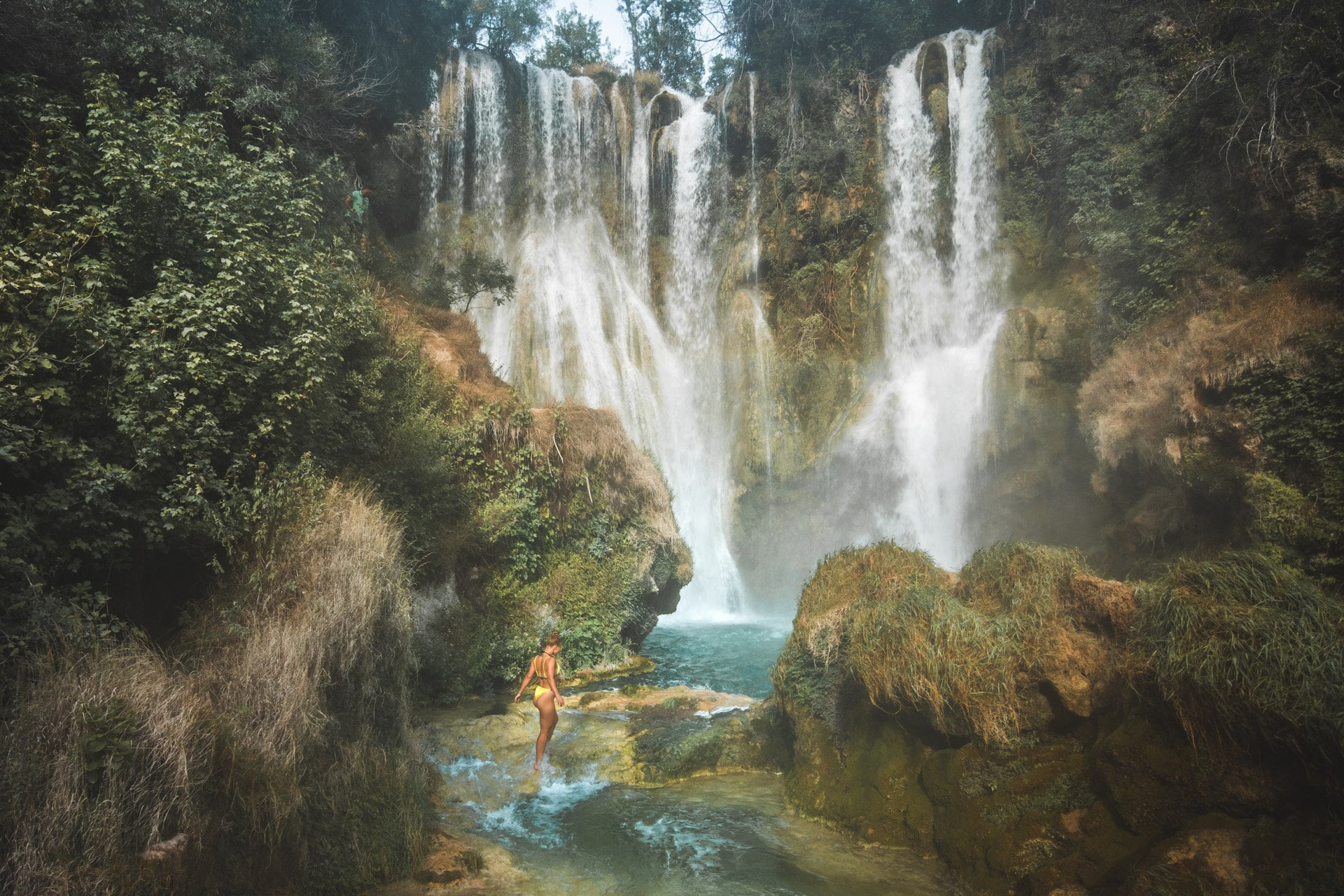
Manojlovac Waterfall stands as the tallest and most impressive waterfall in Krka National Park, soaring to a magnificent height of 59.6 meters (195 feet) and stretching 500 meters in length with a width ranging from 80 to 100 meters. Located 19.5 kilometers from the source of the Krka River, this spectacular cascade consists of a series of travertine barriers, with the highest and final barrier reaching an impressive 32.2 meters at the point where the river makes a dramatic 180-degree bend from northwest to southeast.
The waterfall’s structure is composed of multiple levels distributed across different heights, creating a stunning display of cascading water that crashes down into a lush canyon carved deep into limestone karst. The geological formation represents one of nature’s most impressive engineering feats, where the Krka River has cut through solid rock over millennia to create this natural amphitheater.
The waterfall owes its existence to the continuous deposition and dissolution of travertine limestone, which has created the distinctive tufa barriers that characterize all of Krka’s waterfalls. The ridges, caves, and overhangs formed by this process create unique microhabitats that support various species of mosses, including Eucladium verticillatum and the important tufa-forming moss Palustriella commutata, which creates the long, extensive beards and curtains visible on the largest cascade.
Surrounding the waterfall, the canyon edges are adorned with a diverse vegetative world including European hop-hornbeam (Ostrya carpinifolia), narrow-leaved ash (Fraxinus angustifolia), dogwood (Cornus sanguinea), and purple willow, creating a lush Mediterranean environment that provides a stunning backdrop for the cascading waters.
Best Times to Visit
Spring (April-June): This represents the optimal visiting period for Manojlovac Waterfall, when the Krka River reaches its fullest flow and the surrounding vegetation bursts with vibrant spring colors. During this season, the waterfall displays its maximum power and beauty, with abundant water creating the most dramatic cascades. The mild weather conditions make hiking comfortable, and the reduced tourist numbers compared to summer provide a more peaceful experience.
Summer (July-August): While summer offers the warmest weather and longest daylight hours, it presents some challenges for viewing Manojlovac. During the warmer months, water flow significantly decreases as much of the river’s water is diverted to the nearby Miljacka hydroelectric power plant reservoir. The waterfall may appear less impressive during drought periods, though early morning or late afternoon visits can still provide rewarding experiences while avoiding the hottest temperatures.
Autumn (September-October): Early autumn offers an excellent compromise with pleasant weather, moderate crowds, and improving water levels as autumn rains begin to replenish the river system. The changing foliage adds beautiful color contrasts to the canyon landscape, making this season particularly attractive for photography.
Winter (November-March): Winter visits provide the most solitary experience with virtually no crowds, though weather conditions can be challenging. Some park facilities may have limited hours or be closed during this season. However, for those seeking quiet contemplation and dramatic winter landscapes, this season offers unique rewards. The reduced vegetation allows for clearer views of the waterfall’s geological structure.
Historical Note: The waterfall’s beauty has been appreciated for generations – Austrian Emperor Franz Joseph I and Empress Elizabeth of Bavaria visited and admired Manojlovac during their 1875 tour of Dalmatia, an event commemorated by a restored monument plaque on the trail.
Access Routes
Primary Access – Burnum Entrance: The most convenient access to Manojlovac Waterfall is through the Burnum entrance, located near Ivoševci village, approximately 2.5 kilometers north of Kistanje. This entrance provides direct road access and is open from mid-April through the end of October. The Burnum entrance also offers the added benefit of visiting the nearby archaeological site featuring ancient Roman military amphitheater and bath house ruins.
Driving Directions: From the main Krka National Park area (Skradinski Buk), Manojlovac requires approximately a 45-60 minute drive along narrow, winding mountain roads through the northern section of the park. The journey covers about 45 kilometers and requires careful navigation through remote terrain where mobile signal may be limited.
Navigation Considerations: Due to potential loss of mobile signal in the northern park areas, visitors should download offline maps using apps like Maps.me for hiking routes and ensure Google Maps is downloaded for road navigation. The remote location means standard GPS navigation may not always lead directly to the correct parking area.
Parking Facilities: A small parking area is available near the waterfall access point, though capacity is limited compared to the main park entrances. The parking arrangement is more informal than at major entrances, reflecting the waterfall’s off-the-beaten-path character.
Trail Access: From the parking area, a relatively easy 5-10 minute walk leads to the main viewpoint. However, accessing the base of the waterfall involves a more challenging hike of 30-45 minutes, including sections requiring climbing and scrambling over steep, potentially slippery terrain. Some portions require using ropes for safe descent.
Important Safety Update: Recent reports indicate that access to the base of the waterfall may be restricted due to safety concerns regarding the steep and unstable trail. Visitors should check current park regulations and trail conditions before attempting the full descent.
Alternative Access Routes: Advanced hikers may attempt unofficial trails connecting Manojlovac to other park areas, though these routes are unmarked, unprotected, and recommended only for experienced adventurers. These trails should not be attempted without proper preparation and navigation skills.
Photography Guidelines
Optimal Lighting Conditions: The best photography opportunities occur during early morning (first 2-3 hours after sunrise) and late afternoon (2-3 hours before sunset) when soft, angled light enhances the waterfall’s dramatic features and reduces harsh shadows. The canyon’s orientation means direct sunlight can create challenging contrast during midday hours.
Essential Equipment:
- Tripod: Absolutely essential for long-exposure shots that capture the smooth, silky flow of water cascading down the 59.6-meter drop
- ND Filters: Neutral density filters are highly recommended for achieving optimal long-exposure effects, especially during brighter conditions
- Telephoto Lens: Useful for capturing detailed shots of specific cascade sections and for maintaining safe distance from unstable areas
- Wide-Angle Lens: Essential for capturing the full scope of the 500-meter long waterfall complex and surrounding canyon landscape
Composition Techniques: The waterfall’s multiple levels and 180-degree river bend provide numerous compositional opportunities. Consider capturing both the individual cascade sections and the overall waterfall system. The surrounding Mediterranean vegetation and canyon walls offer excellent framing opportunities for more intimate compositions.
Seasonal Photography Considerations: Spring photography benefits from increased water flow and lush green vegetation, while autumn provides beautiful color contrasts with changing foliage. Winter photography offers dramatic mood and clearer structural views due to reduced vegetation, though weather protection for equipment becomes crucial.
Safety Considerations for Photographers: Given the steep terrain and recent access restrictions, photographers should prioritize safety over getting the perfect shot. The designated viewpoints provide excellent photography opportunities without requiring dangerous positioning. Always inform others of your photography plans and expected return time when exploring remote areas.
Unique Features to Capture:
- The dramatic 32.2-meter final cascade where the river bends
- Long, extensive moss beards and curtains formed by tufa-creating vegetation
- Historical elements including remnants of the old hydroelectric power plant
- The Emperor’s Head rock and commemorative plaque
- Wildlife and bird species that inhabit the canyon environment
Technical Settings Recommendations: For long-exposure waterfall photography, start with shutter speeds between 1-4 seconds to achieve the desired water motion effect. Aperture settings around f/8-f/11 typically provide optimal sharpness across the scene. ISO should be kept as low as possible (100-400) to maintain image quality.
Weather and Timing Strategy: Monitor weather conditions in advance, as recent rainfall significantly improves water flow and photographic opportunities. Overcast conditions can provide excellent soft, even lighting that reduces extreme contrast between the white water and dark canyon walls.
Respect for Environment: When photographing Manojlovac, maintain strict adherence to Leave No Trace principles. The waterfall’s remote location and delicate ecosystem require extra consideration to preserve this natural wonder for future visitors and photographers.
Visitor Information
Entrance Fees: Manojlovac can be accessed with a standard Krka National Park ticket, with prices varying seasonally. A waterfall-specific ticket may be available for 40 Croatian Kuna, or visitors can purchase the full park access ticket for comprehensive exploration.
Facilities: Due to its remote location, no cafes, restaurants, or shops are available at Manojlovac. Visitors should bring sufficient water, snacks, and any necessary supplies. Some basic facilities may be available along the main road at intervals.
Physical Requirements: Accessing the main viewpoint requires only moderate fitness levels, but reaching the waterfall base demands good physical condition, proper hiking footwear, and comfort with steep, potentially challenging terrain.
Duration: Plan 2-4 hours for a complete visit, including travel time, hiking, and photography opportunities. This timing allows for both the easily accessible viewpoint and potentially the more challenging base access if conditions permit.
Manojlovac Waterfall represents the wild heart of Krka National Park, offering visitors willing to venture beyond the main tourist areas an unforgettable encounter with Croatia’s most spectacular cascade. This hidden giant rewards the adventurous spirit with pristine natural beauty, historical significance, and photography opportunities that capture the raw power and timeless majesty of the Krka River’s most impressive creation.